January’s normally dismal and wet weather has been rather non-existent so far this year, with some strangely mild volunteering days taking place. Combined with the sunshine, our Conservation Volunteer Days have been very well attended of late, with the uncommon and greatly enjoyed activity of hedge laying likely also resulting in a boost in numbers!
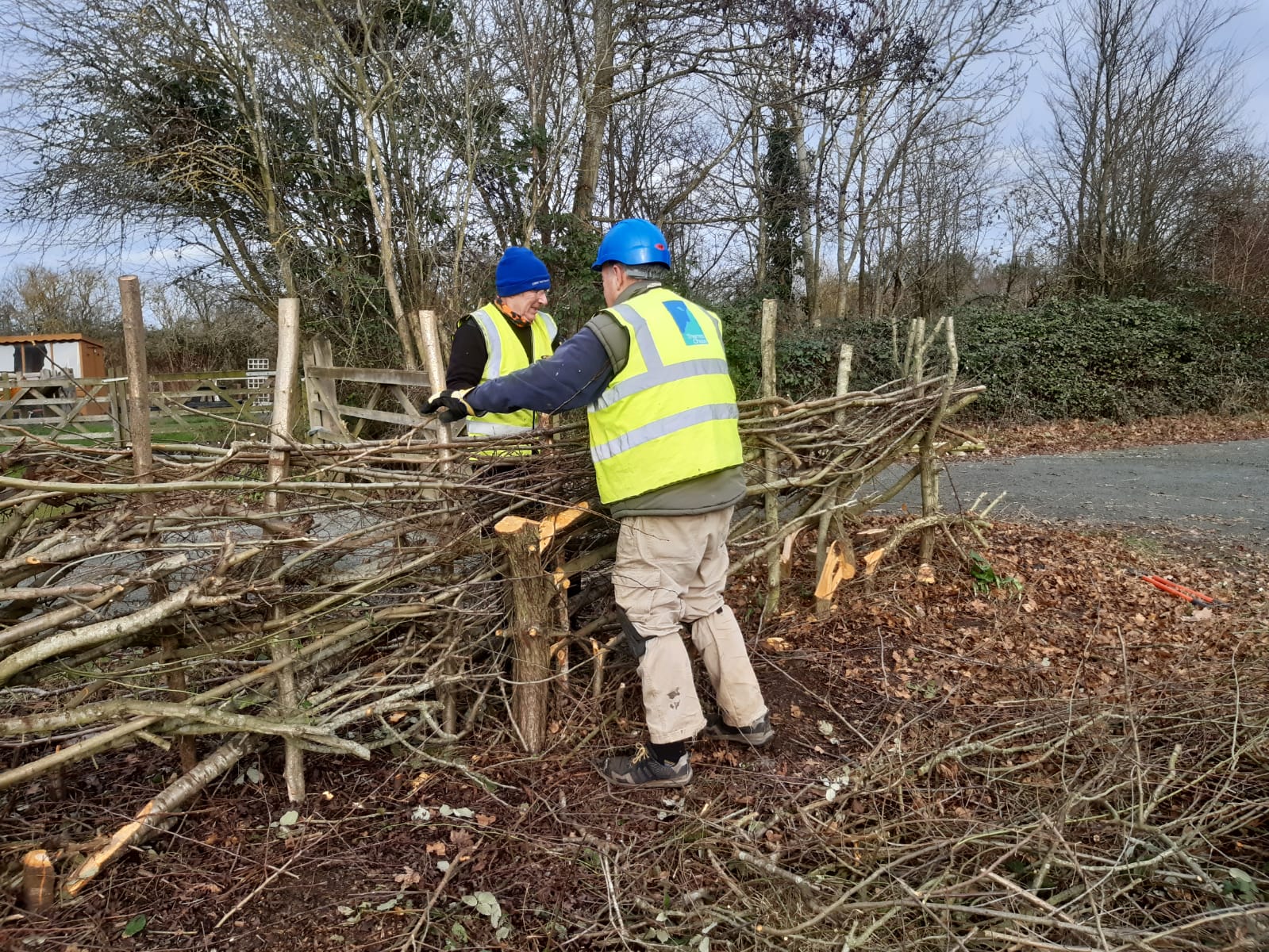
Hedge laying is an ancient and well-honed crafted, involving cutting into shrubs and small trees just enough to lay them on their side and create a barrier, but not enough to harm them so they might not recover. Before barbed wire, laid hedges formed the backbone of agricultural fencing and still today are a strong, resilient and ascetically pleasing method of keeping livestock. The work we have undertaken at the Thames Chase Forest Centre however is purely to display this craft to the public. As such, we have used the South of England style which is a firm favourite of the volunteers.

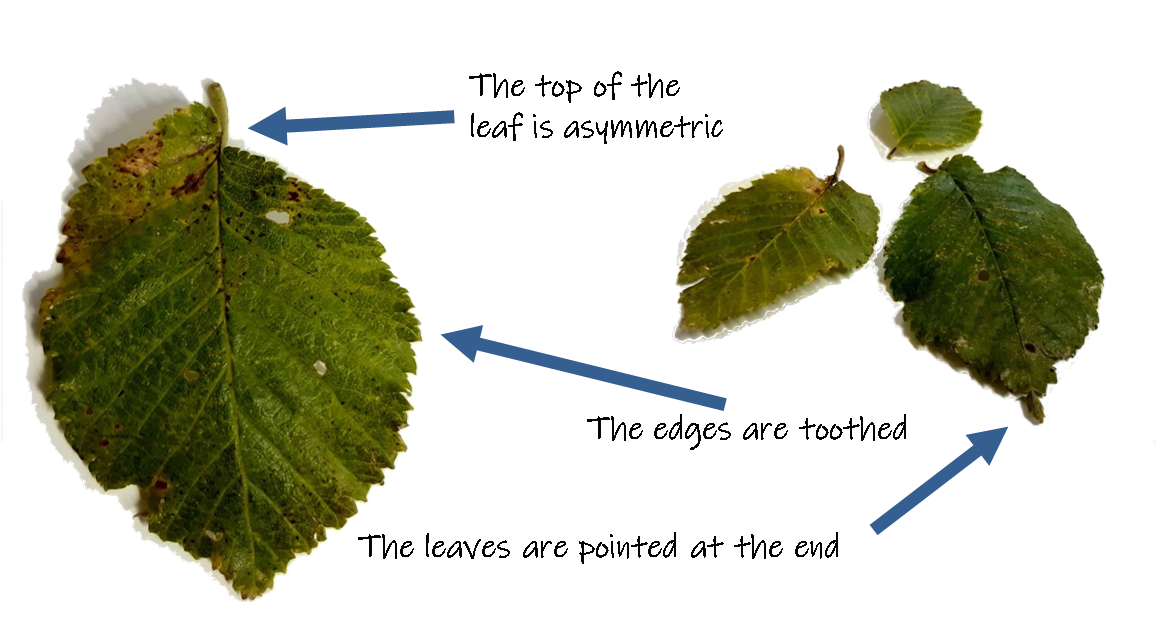
We have also been taking special care of our Elm trees over the past month, constructing rabbit guards around the smaller trees. One of the Elm trees has died from Dutch Elm Disease (DED), a fungal infection which is widespread throughout Europe, but by taking part in the Great British Elm Experiment, we are hopeful for the future of the species. With a healthy layer of compost to give them a head-start come spring, we are optimistic that the remaining eleven Elm trees will have a great growing year in 2022. See the image below on how to identify an Elm leaf, once they grow in spring.
Do you have anything to add to this page? Click below to submit your content.