Conservation Project Blog June 2022
Non-Native Invasive Species and Pests
Non-native invasive species are organisms which are not naturally found in the U.K. and pose a threat to U.K. wildlife. They can vary in type and origin, from the Colorado potato beetle which feasts on (unsurprisingly) potato crops to the Signal Crayfish, a voracious hunter of our waterways.
Himalayan Balsam is one such species, being an annual plant of quick and tall growth, reaching between 2m and 3m in height in a single growing season. Coupled with a lack of predators and a very effective seed distribution method, Himalayan Balsam quickly takes over local habitats especially riverbanks. Hand pulling is an effective control method, as long as it is conducted before the plant has time to flower and create its seeds. And that is what the Conservation Volunteers have been up to recently, working with staff from Forestry England to manage this invasive species on one of their sites. It is hot work in the June mini-heatwave, but well worth it to see the riverbanks looking clear and ready for native species to grow in their place!
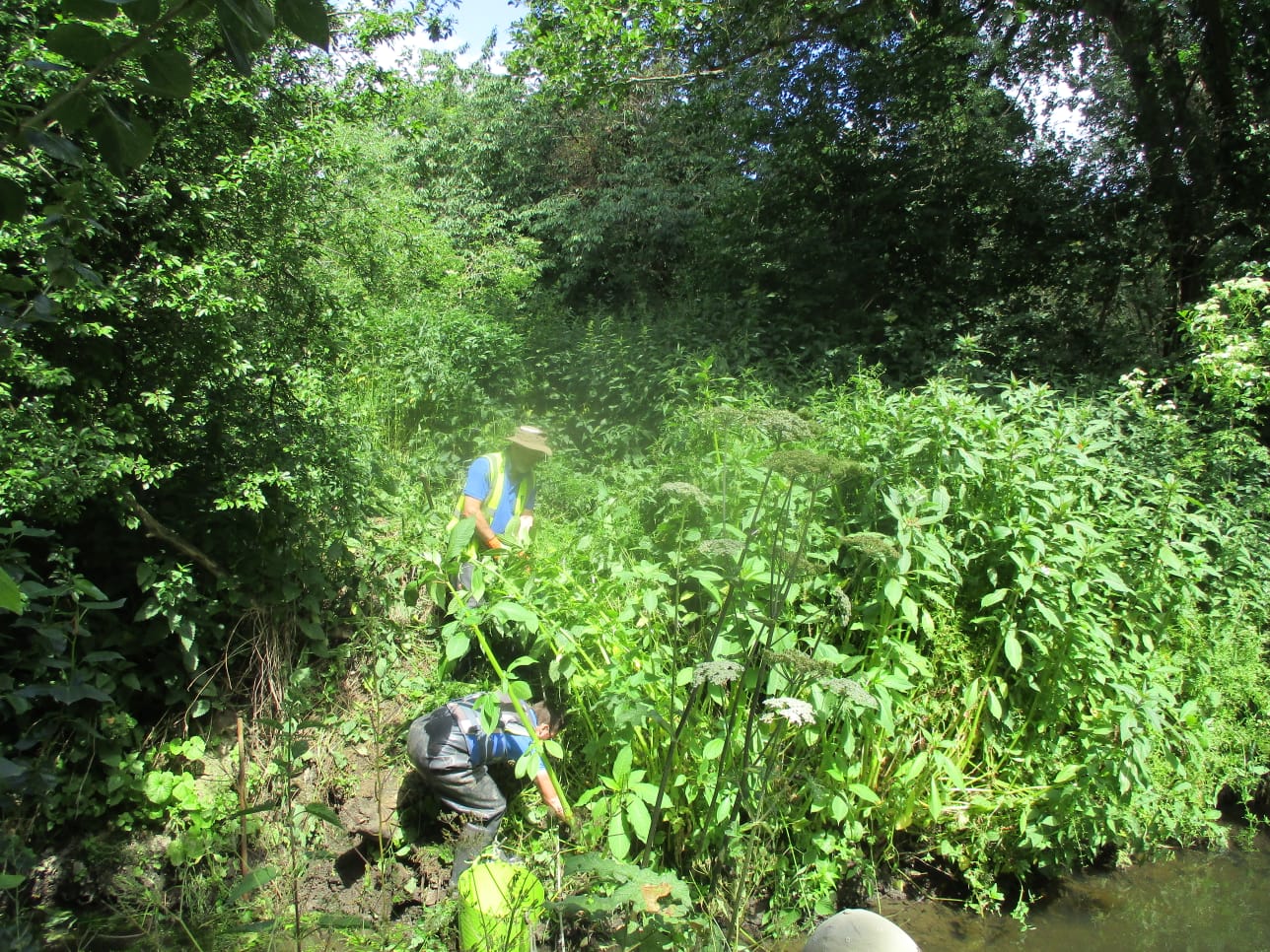
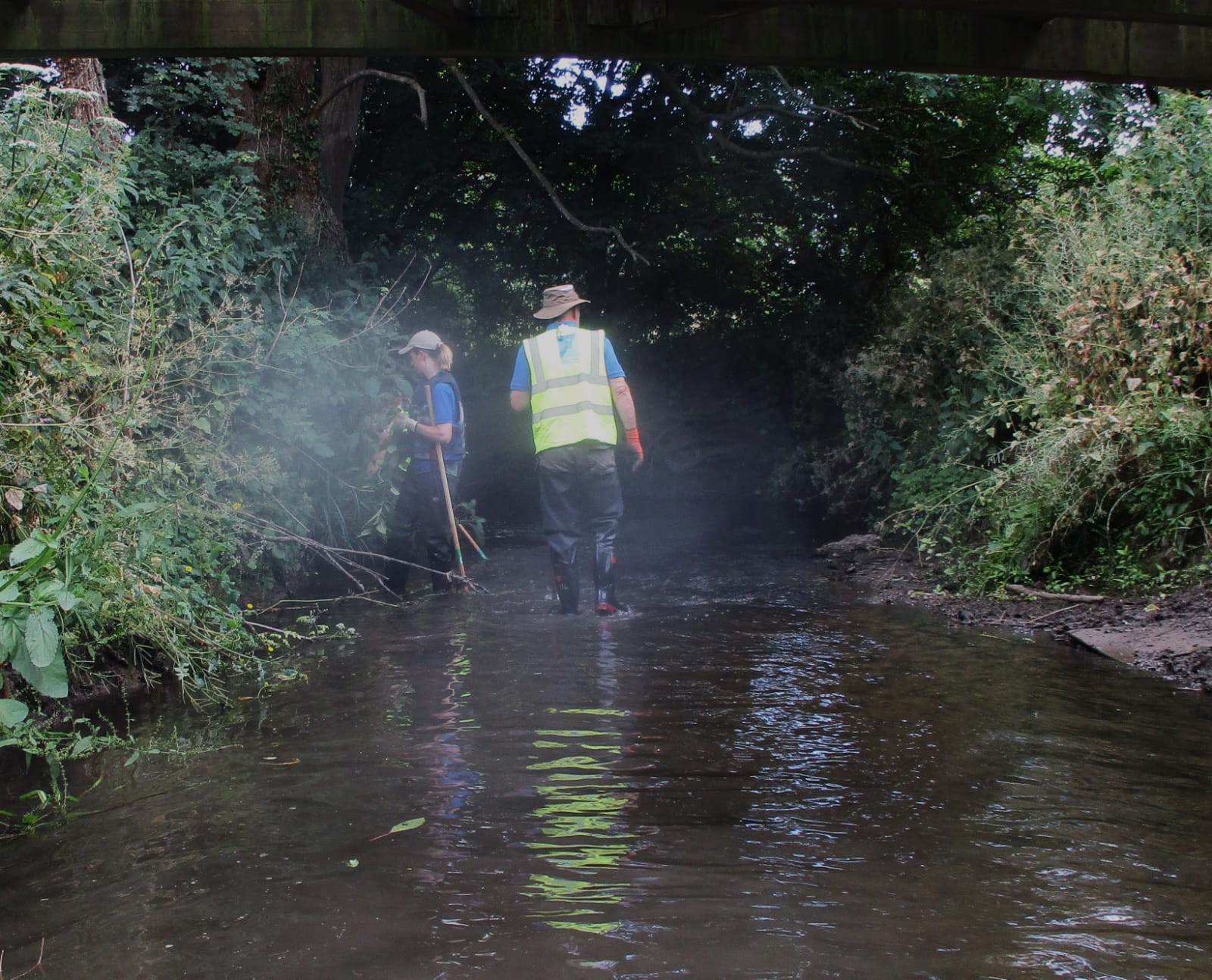
Conservation volunteers working with Forestry England staff to clear Himalayan Balm by hand.
Caterpillar’s have also been running rampant this year, with many apple and spindle trees being badly impacted. Although native, Ermine Moth is believed to be the culprit. These white caterpillars with black spots are normally specific to individual species of plant, with an Apple Ermine Moth and Spindle Ermine Moth both being common in England. The webbing they produce, and extensive defoliation are scary to behold. However, the long term damage to the plant is normally relatively little as long as the plant can recover and build up its defences for the next growing season.
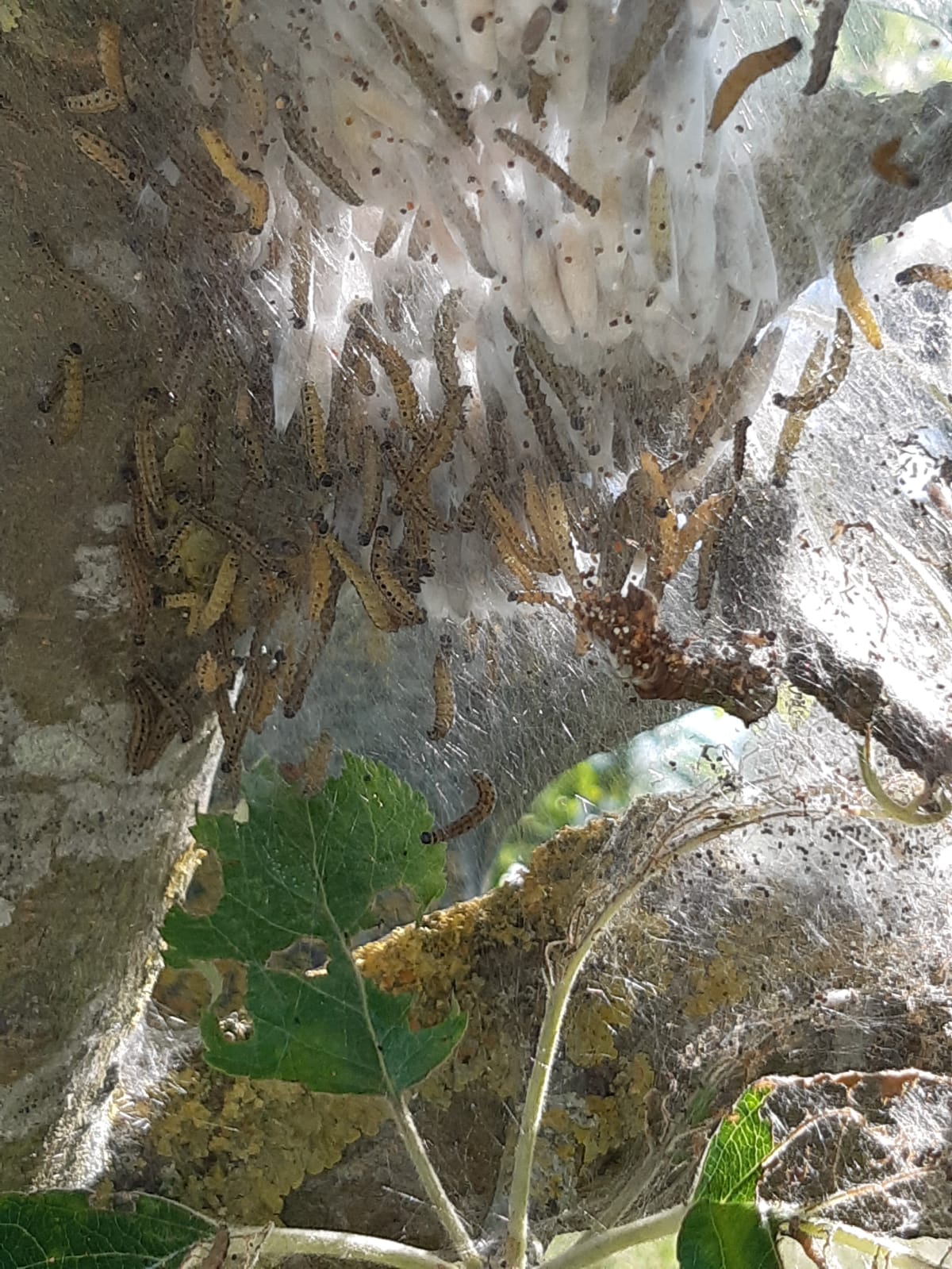
Close up of caterpillers
Photos with thanks to Jill Harding and Alex Hewitt
Do you have anything to add to this page? Click below to submit your content.